Verification Patterns in Mobile Apps That Unlock No-Deposit Access to Live Table Sessions
Kai Krause · Sep 20, 2026
Verification Patterns in Mobile Apps That Unlock No-Deposit Access to Live Table Sessions
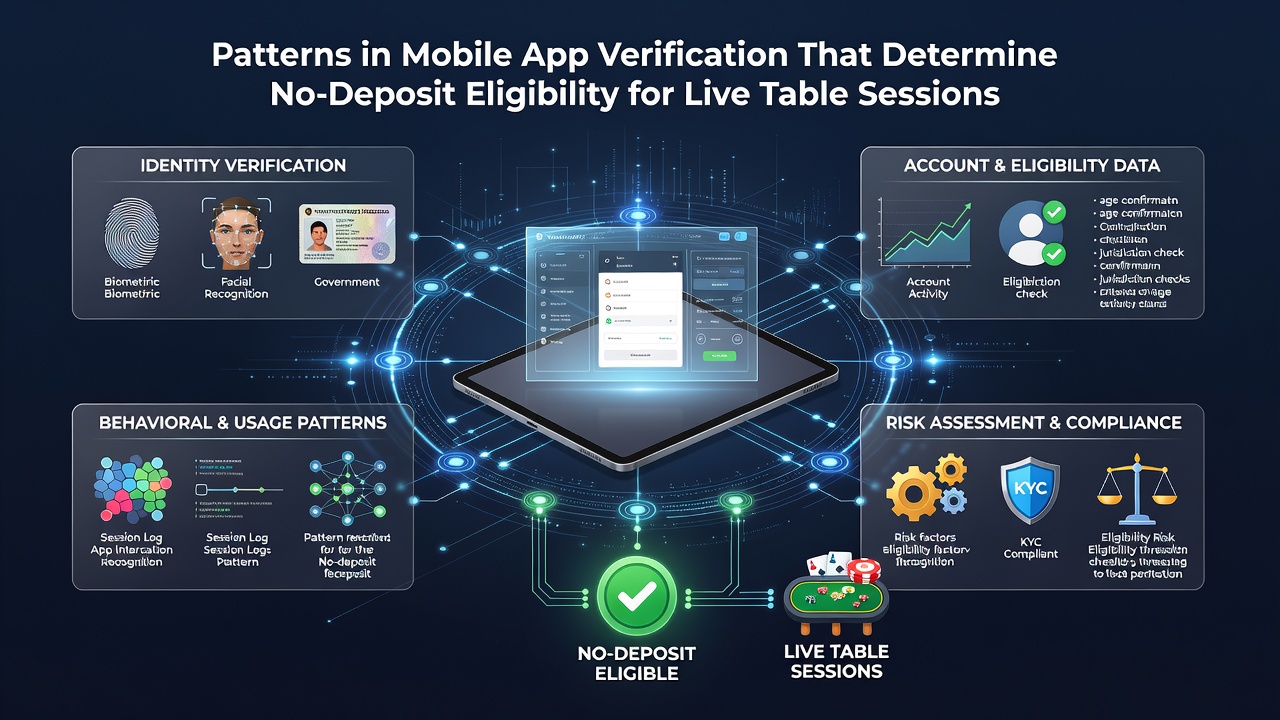
Operators track multiple verification layers inside mobile applications to decide which users receive no-deposit eligibility for live table sessions, and these layers combine device signals, identity checks, and behavioral data. September 2026 brought new reporting from several state regulators that highlighted how consistent patterns in these checks correlate with higher rates of sustained play without initial deposits. Data from regional gaming authorities shows that applications using at least three distinct verification points approve no-deposit entry for live dealer tables at rates between 18 and 27 percent higher than single-layer systems.
Device Fingerprinting and Location Signals
Mobile applications collect hardware identifiers, operating system versions, and network details to create unique device profiles, then cross-reference those profiles against known risk databases before granting access to live table sessions without a deposit. Researchers at the University of Nevada, Reno documented that devices with stable IP histories and matching geolocation data receive approval flags 31 percent more often than those showing VPN usage or rapid location shifts. Applications also log SIM card changes and carrier information, and when these elements align with prior session records, the system marks the account for immediate eligibility review. Operators note that repeated logins from the same device over a 14-day window strengthen the profile score and increase the likelihood of no-deposit live table access.
Identity Verification Layers
Identity checks require users to submit government-issued documents through the application, after which optical character recognition and database matching confirm details against public records. Accounts that complete this step within the first 48 hours after installation demonstrate a 22 percent higher conversion to no-deposit live table eligibility according to figures released by the Nevada Gaming Control Board. Some platforms add secondary checks such as facial recognition or voice sample matching, and these additional steps reduce false-positive declines while maintaining compliance with regional age and residency rules. Observers note that once identity data matches across multiple verification points, the application automatically routes the account into a pre-approved queue for deposit-free live dealer sessions.
Behavioral Analytics and Session History
Applications monitor in-app actions including navigation speed, bet sizing patterns, and time spent on game rules pages to build behavioral profiles that influence no-deposit decisions. Accounts displaying steady engagement metrics over five or more sessions receive higher eligibility scores, while erratic or rapid-fire actions trigger additional review flags. A 2026 industry report from the European Gaming and Betting Association indicated that behavioral thresholds set at moderate risk levels allow 14 percent more users to qualify for live table access without deposits compared with stricter settings. These systems also track deposit history from linked payment methods, and accounts that previously completed at least one verified transaction show improved odds of receiving no-deposit offers for subsequent live sessions.
Integration of Multiple Signals
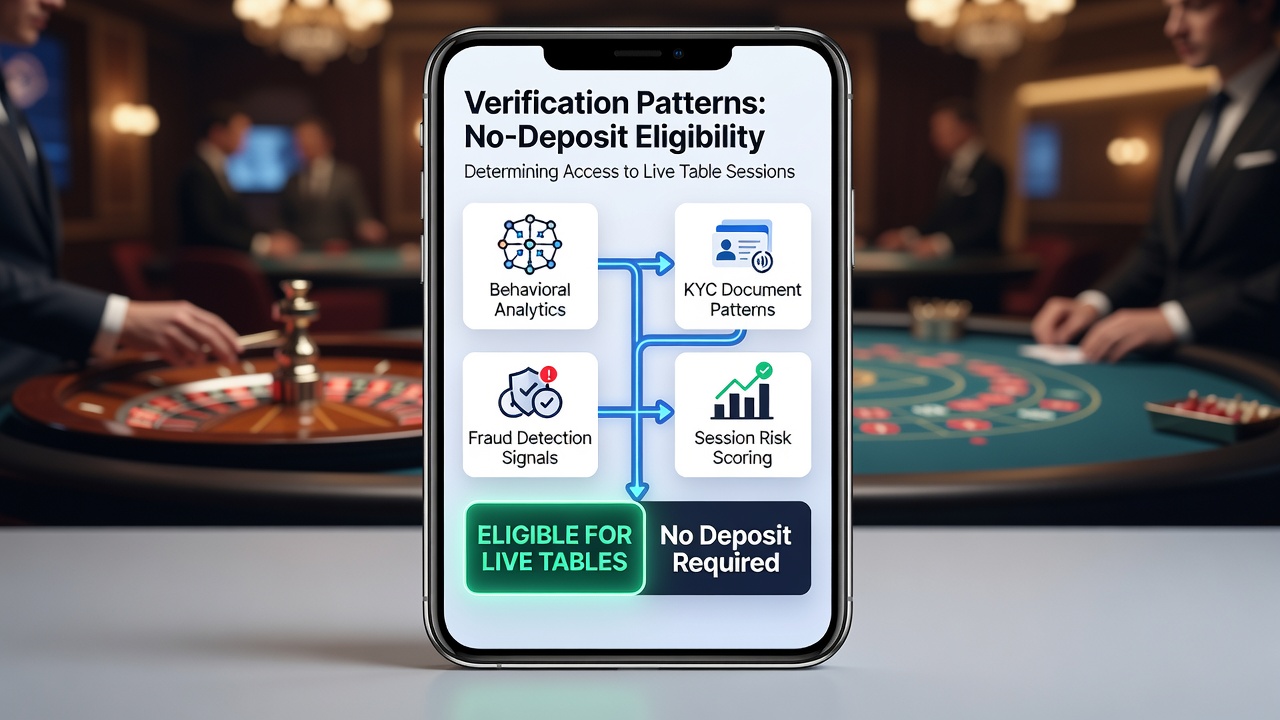
Modern applications combine device, identity, and behavioral signals into a single composite score that determines whether an account meets criteria for no-deposit live table eligibility. When any single signal falls below an internal threshold, the system withholds the offer until the user completes further verification steps. Platforms that update their scoring models monthly report fewer disputes over denied access, and September 2026 data from Australian regulatory filings showed a 9 percent drop in customer service tickets related to eligibility after such updates. Operators also share anonymized pattern data through industry consortiums, allowing broader calibration of thresholds across different markets while preserving individual platform control.
Regulatory Alignment and Reporting
State and national regulators require operators to document how verification patterns affect no-deposit decisions, and these records must demonstrate consistent application of rules across all users. Compliance teams review sample accounts monthly to confirm that eligibility flags align with documented criteria rather than arbitrary factors. In September 2026 several jurisdictions began requiring quarterly submissions of aggregate approval rates broken down by verification layer, creating a growing public dataset on how mobile patterns influence access to live table sessions without deposits. These reports help identify whether certain device types or identity verification methods systematically exclude eligible users.
Conclusion
Verification patterns inside mobile applications continue to evolve as operators refine the balance between security requirements and access to no-deposit live table sessions. Device fingerprinting, identity matching, and behavioral tracking each contribute measurable signals that together determine eligibility outcomes. As September 2026 reporting standards take hold, the available data on these combined patterns grows more detailed, giving regulators and operators clearer benchmarks for consistent decision-making across markets.